:.: Panasonic + OpenBSD = <3
Hi there, long time no see...

I have always been fascinated by how the Japanese create and do things. I believe they have a unique perspective because they often live in compact spaces, where everything must be functional, small, and lightweight. This applies to almost everything in flats or houses, as well as laptops and computers. I can certainly say that Japanese laptops are by far the smallest and lightest available, and I absolutely love that. For me, a laptop must be as light as paper and functional; if it is super powerful, that's a plus, but not always a necessity. My current laptops are Japanese, and none of them weigh more than 900gr.
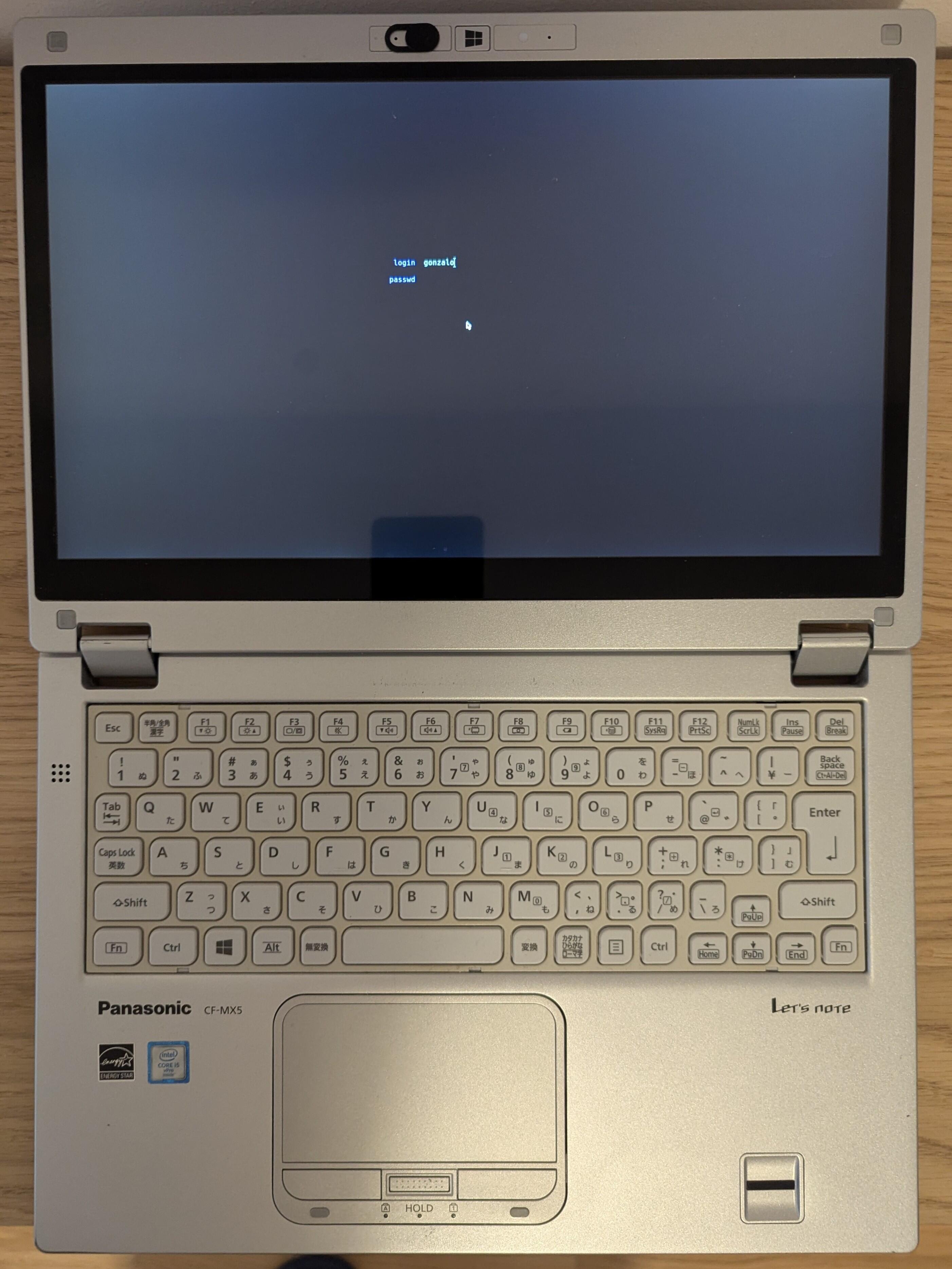
I have been learning Japanese for a while now, and I watch a lot of Japanese TV shows, movies, and anime. I have always liked those gray Panasonic laptops with many connectors, a compact style, and a kind of cyberpunk vibe. So, on my last trip to Japan, I finally bought an "old" Panasonic Let's Note CF-MX5. It was somewhat of an impulse buy because (on another trip, I tried harder to be sure), aside from a quick search on the hardware, I wasn't sure it would support OpenBSD 100%. This is usually a dealbreaker for me since I generally only use OpenBSD.
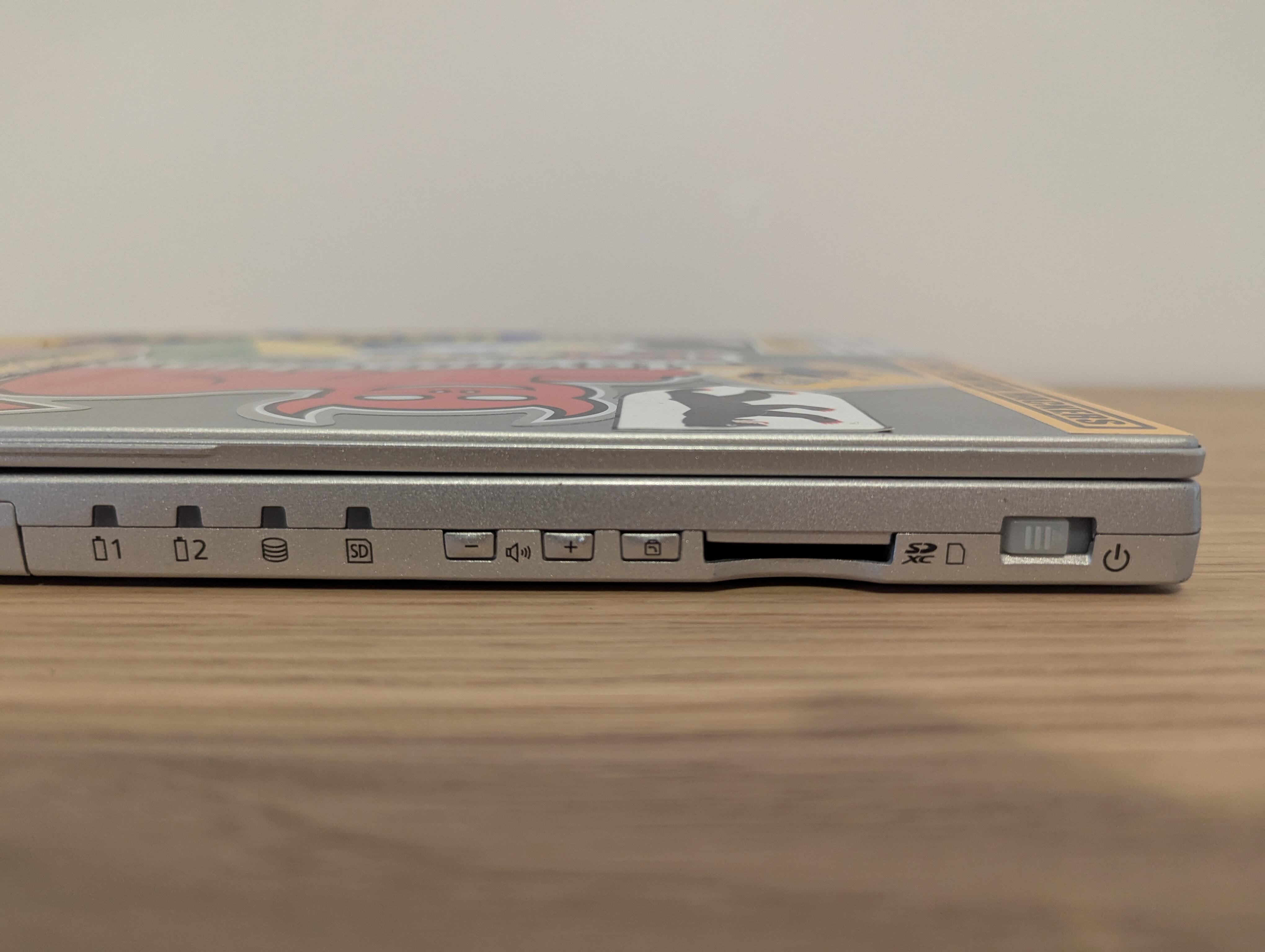
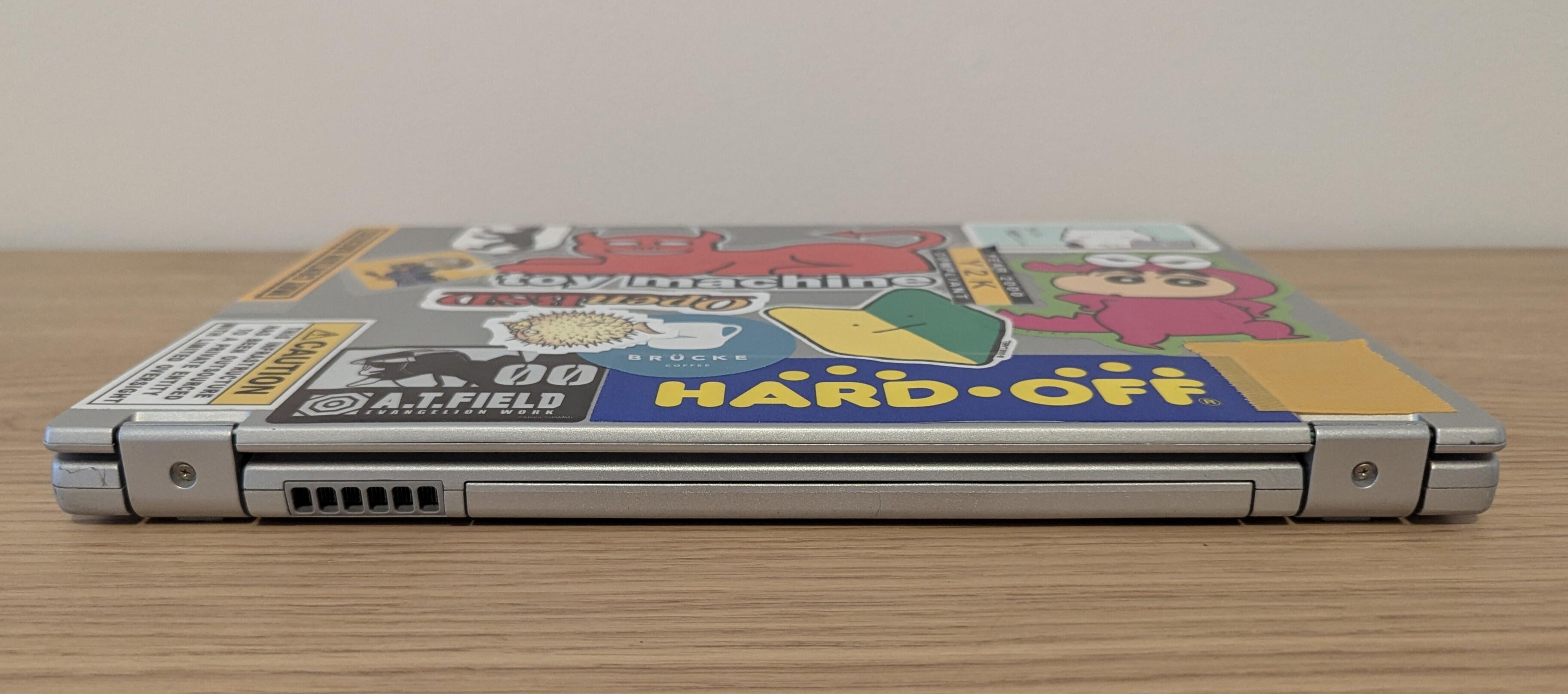
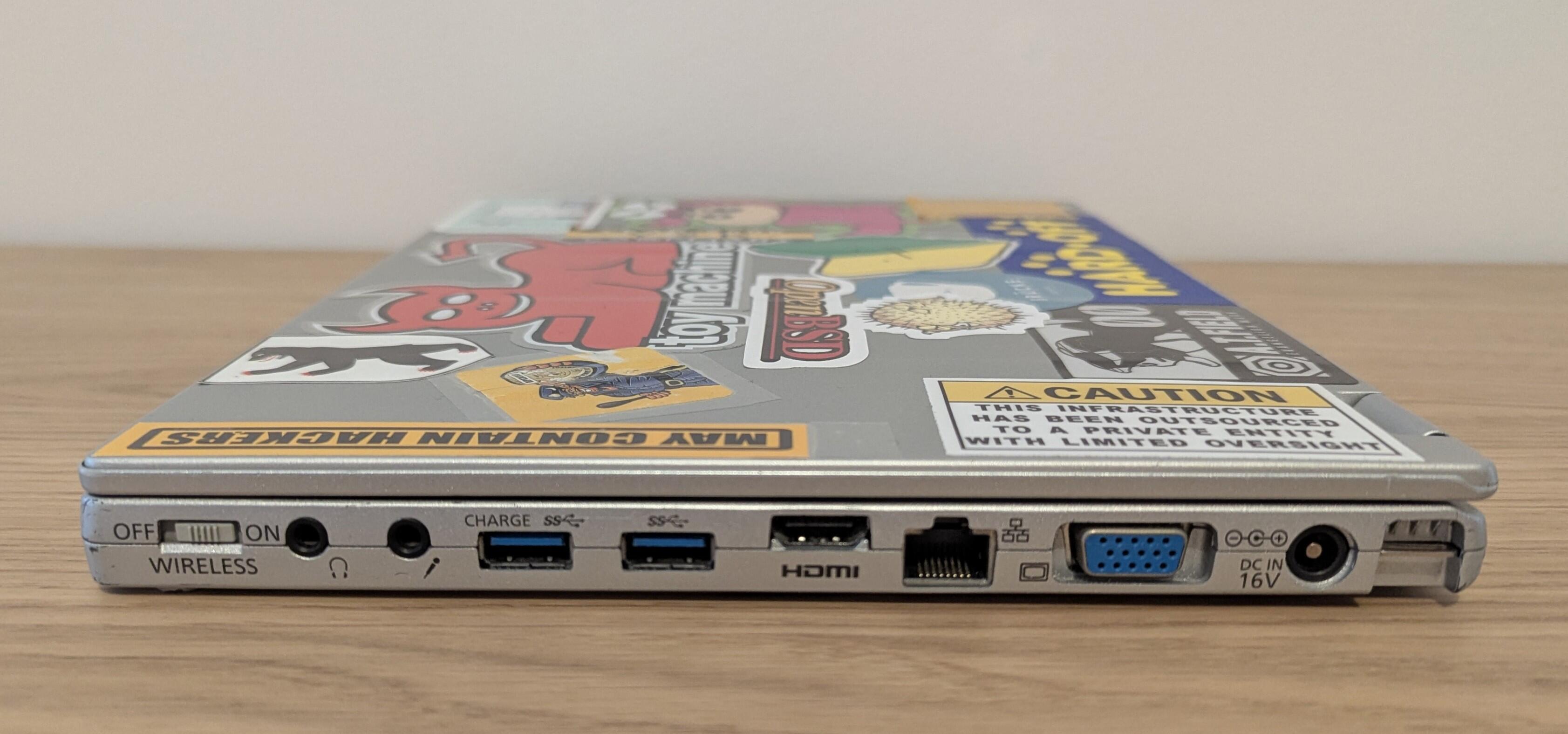
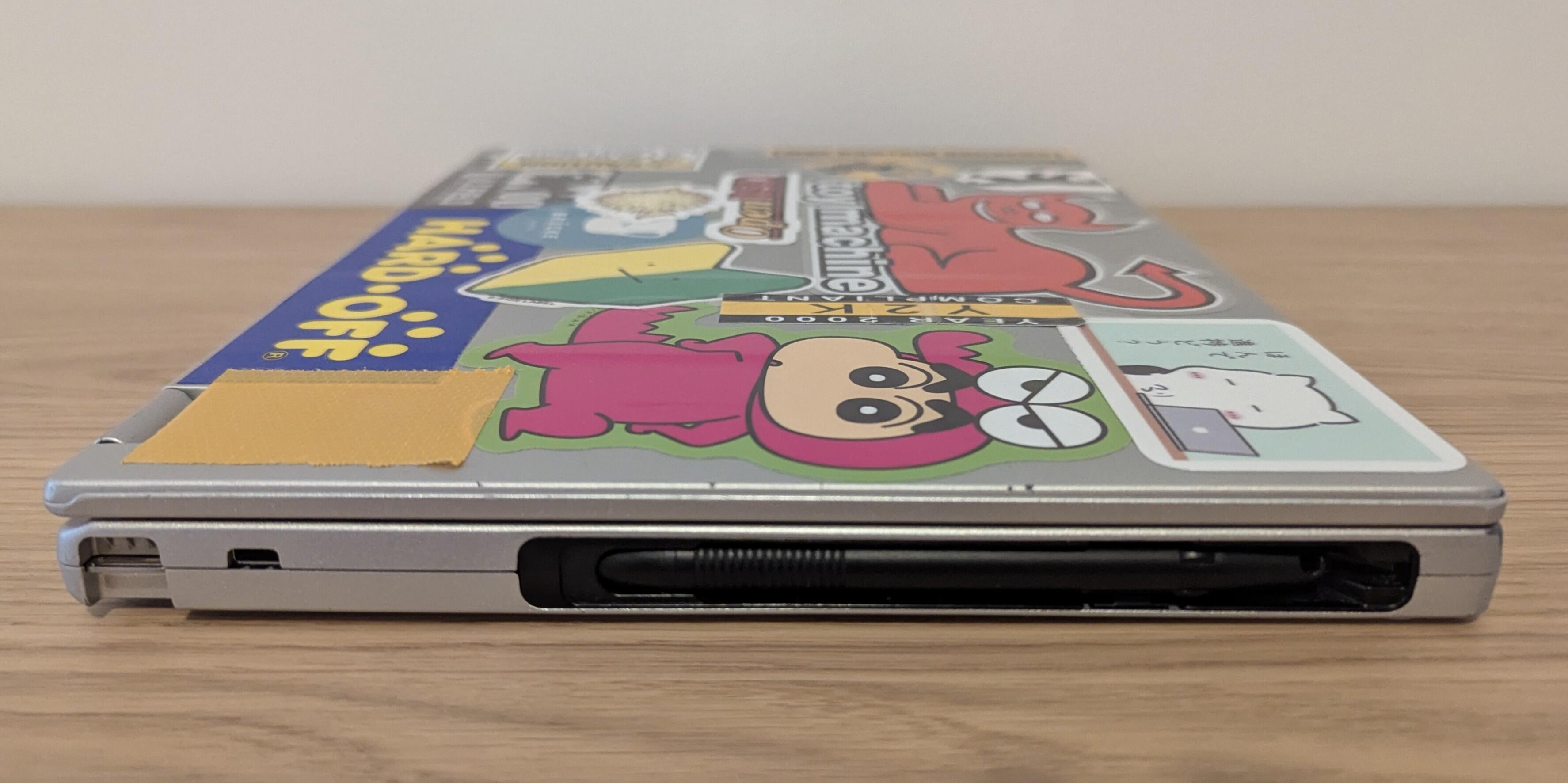
Lucky for me, everything works out of the box with zero struggle. Indeed, it is a very nice laptop to carry in a backpack for daily use or traveling. It is also quite hardcore and well-made, so despite weighing 900 grams, you never have the feeling that you will destroy it just by typing on it or folding it.
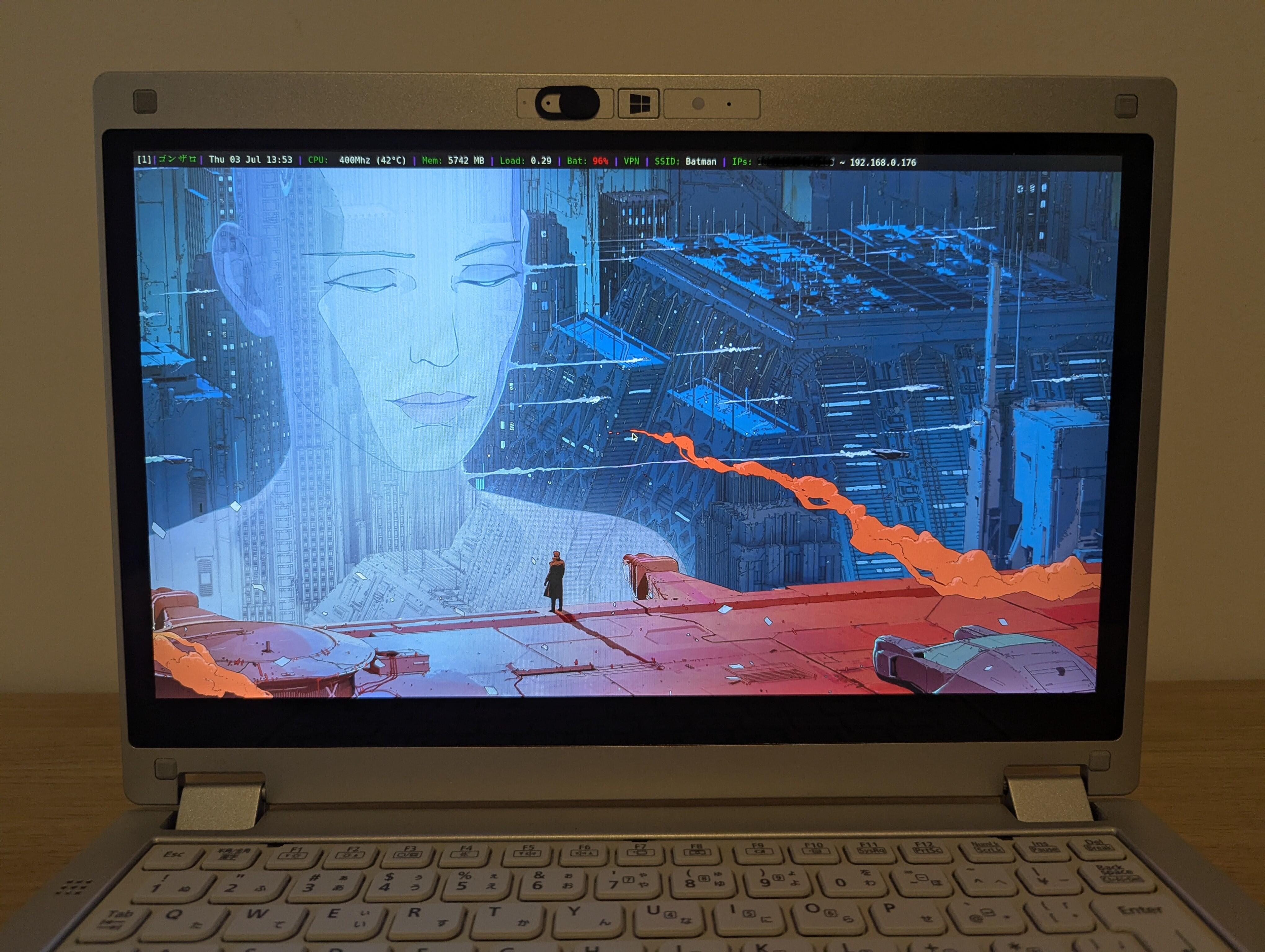
A quick outputs:
$ sysctl -a | grep hw
hw.machine=amd64
hw.model=Intel(R) Core(TM) i5-6300U CPU @ 2.40GHz
hw.ncpu=4
hw.pagesize=4096
hw.sensors.cpu0.temp0=41.00 degC
hw.sensors.cpu0.frequency0=800000000.00 Hz
hw.sensors.cpu1.frequency0=800000000.00 Hz
hw.sensors.acpiac0.indicator0=Off (power supply)
hw.sensors.acpibat0.volt0=7.20 VDC (voltage)
hw.sensors.acpibat0.volt1=7.40 VDC (current voltage)
hw.sensors.acpibat0.power0=9.58 W (rate)
hw.sensors.acpibat0.watthour0=18.84 Wh (last full capacity)
hw.sensors.acpibat0.watthour1=2.95 Wh (warning capacity)
hw.sensors.acpibat0.watthour2=0.39 Wh (low capacity)
hw.sensors.acpibat0.watthour3=16.06 Wh (remaining capacity), OK
hw.sensors.acpibat0.watthour4=32.83 Wh (design capacity)
hw.sensors.acpibat0.raw0=1 (battery discharging), OK
hw.sensors.acpibat1.volt0=7.60 VDC (voltage)
hw.sensors.acpibat1.volt1=8.15 VDC (current voltage)
hw.sensors.acpibat1.power0=0.00 W (rate)
hw.sensors.acpibat1.watthour0=10.48 Wh (last full capacity)
hw.sensors.acpibat1.watthour1=1.36 Wh (warning capacity)
hw.sensors.acpibat1.watthour2=0.18 Wh (low capacity)
hw.sensors.acpibat1.watthour3=10.48 Wh (remaining capacity), OK
hw.sensors.acpibat1.watthour4=15.20 Wh (design capacity)
hw.sensors.acpibat1.raw0=0 (battery full), OK
hw.sensors.acpibtn0.indicator0=On (lid open)
hw.sensors.acpitz0.temp0=44.00 degC (zone temperature)
hw.sensors.acpitz1.temp0=44.00 degC (zone temperature)
hw.sensors.pchtemp0.temp0=44.00 degC
hw.sensors.softraid0.drive0=online (sd1), OK
hw.cpuspeed=400
hw.setperf=0
hw.vendor=Panasonic Corporation
hw.product=CFMX5-3
hw.version=003
hw.physmem=8457531392
hw.usermem=8387248128
hw.ncpufound=4
hw.perfpolicy=auto
hw.smt=1
hw.ncpuonline=4
$ apm
Battery state: high, 90% remaining, 165 minutes life estimate
AC adapter state: not connected
Performance adjustment mode: auto (400 MHz)A full dmesg in here if you got curious
It also has umb(4) but I still haven't opened it all up to find if there is any slot for a SIM card. However, ifconfig shows it up. Wireless, sound, video, HDMI, SD card reader, jacks, and VGA work as expected too. The only thing that doesn't work is the fingerprint button. Additionally, the DVD drive has been removed, which contributes to its lighter weight, making it even more portable for daily use and travel.
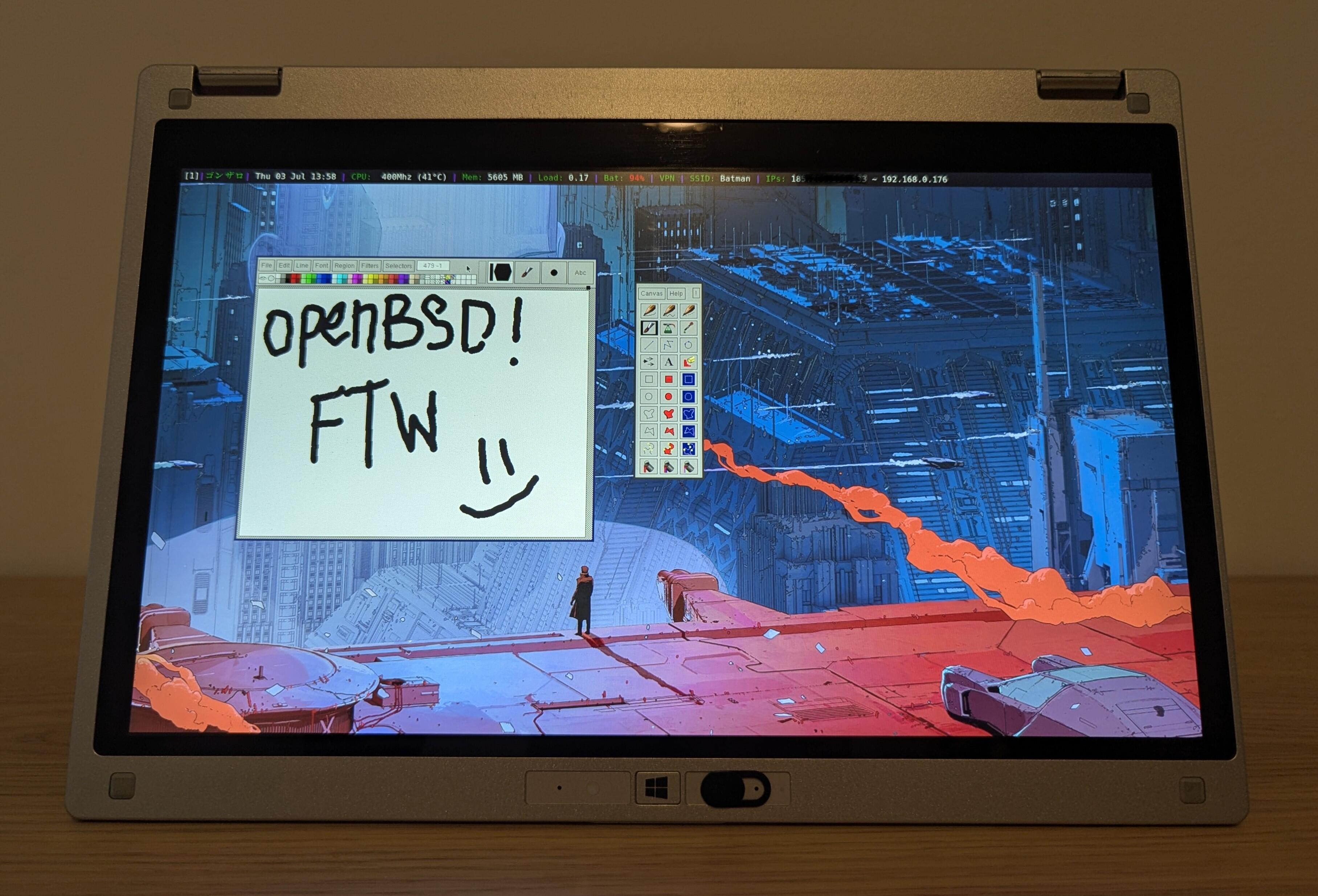
In conclusion, my experience with Japanese laptops has been nothing short of exceptional. The meticulous attention to detail and the emphasis on functionality in their design truly set them apart. The Panasonic Let's Note CF-MX5, with its lightweight build and robust features, exemplifies this philosophy. Additionally, it serves as a good and affordable option for using OpenBSD, providing a full set of hardware and functionalities that enhance the overall user experience.
